Thursday, March 17, 2016

Alkalising diet

Here's a fact. The pH of your blood is 7.4, which IS slightly alkaline. If it drops below 7 or rises above 7.7, you will DIE. That's right, so why on earth would you want to mess with that equilibrium in the first place, even if you could.

The body is actually quite amazing. It manages to maintain the blood pH at 7.4 through a series of mechanisms as it circulates through the body.

What you eat will not affect the pH of your blood. Firstly, the stomach pumps out a strong acid to digest food. Stomach acid has a pH of 3. If food wasn't acidic before it enters the stomach, it sure will be after. And even if you gulped a whole bunch of antacids, your amazing body and stomach will soon regulate the acid to return it to it's perfect food-digesting pH of 3. It's a pointless battle.

Then the food is pushed into the small intestine, whereby the acid is neutralised and further digestion and absorption occurs. Whatever you ate is now all a certain pH, which is of course, the same as everything else within the small intestine.

And as to the prevention of cancers and the idea that cancers will not growing in an alkaline body. There are cancers (leukemia and lymphoma to name a few) that thrive within the alkaline environment of our blood, which, if you remember, must remain slightly alkaline (or you will DIE).  


Monday, March 14, 2016

Gluten

Let's start with the most basic of questions. What exactly is gluten? 
Gluten is a mix of proteins in wheat and related grains including spelt, barley and rye. Wheat gluten consists of two major componts, gliadin and glutenin. Glutenin is responsible for the elasticity and strength of dough. Essentially, it's a naturally occurring, and normal protein in many of the foods we eat.

Given the fact that it is "all natural" in this first world climate of cleansing and clean eating, it's mind boggling how a naturally occurring plant protein is being avoided to the extend that gluten has been and continues to be. 

Obviously those with CD need to avoid gluten, all gluten, and all the time, because it elicits an immune response in them which destroys their gut lining, leading to other long term complications. But this does not make gluten a bad substance for the majority of the population.

The prevalence of Celiac disease (CD) in the USA was 0.71% according to a 2012 study. (1)


There is some evidence to suggest certain non-celiacs do suffer a type of non-celiac gluten sensitivity. This is an area that needs a lot more study. Non-celiac gluten sensitivity has been reported at 6% of the population.

A 2016 study provided some evidence towards this. Of 140 subjects enrolled in the study, 101 experienced improvement on a GF diet and of those subjects, 14% were found to have a NCGS. Limitations of the trial include the low subject numbers and self-reporting. (2)

Many people who avoid gluten do so without any real professional advice, and in a lot of cases, any real understanding of why they are doing so. It may be that they legitimately do suffer side effects from the food they eat, but health professionals are best at isolating the true cause of the gastrointestinal disturbances.

What could be worth investigating further in many of these NCGS individuals is FODMAPs as a cause of their symptoms and discomfort. This does not rule out wheat as a cause (which would still support the use of a GF diet (for simplicity sake). But it could actually identify other or alternative factors too. 

FODMAPs is the accronym for Fermentable Oligosaccharides, Disaccharides, Monosaccharides and Polyols and I will discuss these as a future topic.


1. Am J Gastroenterol. 2012 Oct;107(10):1538-44; quiz 1537, 1545. doi: 10.1038/ajg.2012.219. Epub 2012 Jul 31.
The prevalence of celiac disease in the United States.
Rubio-Tapia A1, Ludvigsson JF, Brantner TL, Murray JA, Everhart JE.


2. PMID:
 
26867199
 
[PubMed - in process] 
PMCID:
 
PMC4772047

Saturday, January 23, 2016

The resurection...

It's been a long time since I've written a post for this blog and I'm not sure I will continue along the path of family recipes as I was doing so in the past. 

It will still be a blog about nutrition, and it's quite possible that family nutrition will be a frequent topic. However, this blog is now more of a personal nutrition journal for me to document my unpaid dietetic work and keep up to date with current nutrition topics. 

I can't promise there will be many pictures. There will be lots of facts though. For pictures, pop across to my much more interesting blog at www.lilysageandco.com .


Tuesday, May 31, 2011

Winter Fruit Kebabs and Minted, Lime Syrup

Make fruit fun by presenting it in a different way. The cut fruit has been covered lightly in a minted lime juice syrup to prevent browning as well as add a delightfully subtle fruit tingle flavour.


Minted, Lime Syrup
1 whole lime
1 tbsp raw sugar
1tbsp finely chopped fresh mint

  1. Pop whole lime into the microwave for about 30 seconds on high. This will warm up and burst juice cells making it easy to extract liquid. It also mellows the tartness.
  2. Sqeeze as much lime juice out as possible. You may need to cover it with tea towel first if it is very hot.
  3. Add sugar, stirring until dissolved.
  4. Stir through mint.
  5. Use to brush over fruit for kebabs, and then pour remaining over finished kebabs. Or try stirring through a fruit salad for another delicious idea.


Tuesday, May 24, 2011

Banana Blueberry Pancakes

Who doesn't love pancakes for a special weekend breakfast treat? Or anytime for that matter! The addition of banana and blueberries make this classic comfort food exceptionally nutritious.

Top with a sprinkle of sugar and a squeeze of lemon. Or pack a few away for an easy snack for kids on the run.


Banana Blueberry Pancakes
1 cup SR flour
1 banana, mashed
1/4 cup sugar
1 cup milk
1 egg, lightly beaten
1 tsp vanilla extract
1 cup frozen blueberries

  1. In a large mixing bowl, combine all ingredients except for the blueberries. Stir well until mix is smooth and lump-free.
  2. Add the blueberries last, stirring through quickly just before you are ready to cook the pancakes. If you add them early on or stir too much after adding them, the pancake mix with turn blue, although still taste just as good!
  3. Cook on a hot lightly greased frypan, turning once when you see bubbles start to appear on the uncooked surface.
  4. Enjoy!


Tuesday, May 17, 2011

Banana rice pudding

Rice pudding is the perfect winter comfort food. It can also be a nutritious snack for children too. This version uses a lower GI rice (which makes cooking quicker too!), is a rich source of calcium and has only a small amount of sugar in it. The sweetness comes from the addition of ripe bananas.


Banana Rice Pudding
1 cup basmati rice
4 cups milk
1/2 tsp nutmeg
1/2 tsp cinnamon
1 tsp vanilla extract
2 ripe bananas, mashed
2 tbsp soft brown sugar
2/3 cup sultanas (optional)

  1. Add rice, milk, nutmeg, cinnamon, vanilla, and mashed bananas to a saucepan. Bring to the boil, then reduce heat and simmer gently for about 20-30 minutes or until rice is cooked. Stir frequently. Liquid will have reduced but there will still be a fair bit of liquid in it.
  2. Add sugar near the end, stir well to combine and remove from heat.
  3. Place lid on saucepan and allow to rest for at least ten minutes before serving or storing away.
  4. Pudding will continue to thicken over time, so allow it to be a little more liquidy than you would prefer if you plan to store it away.
  5. Freezes well.


Wednesday, May 11, 2011

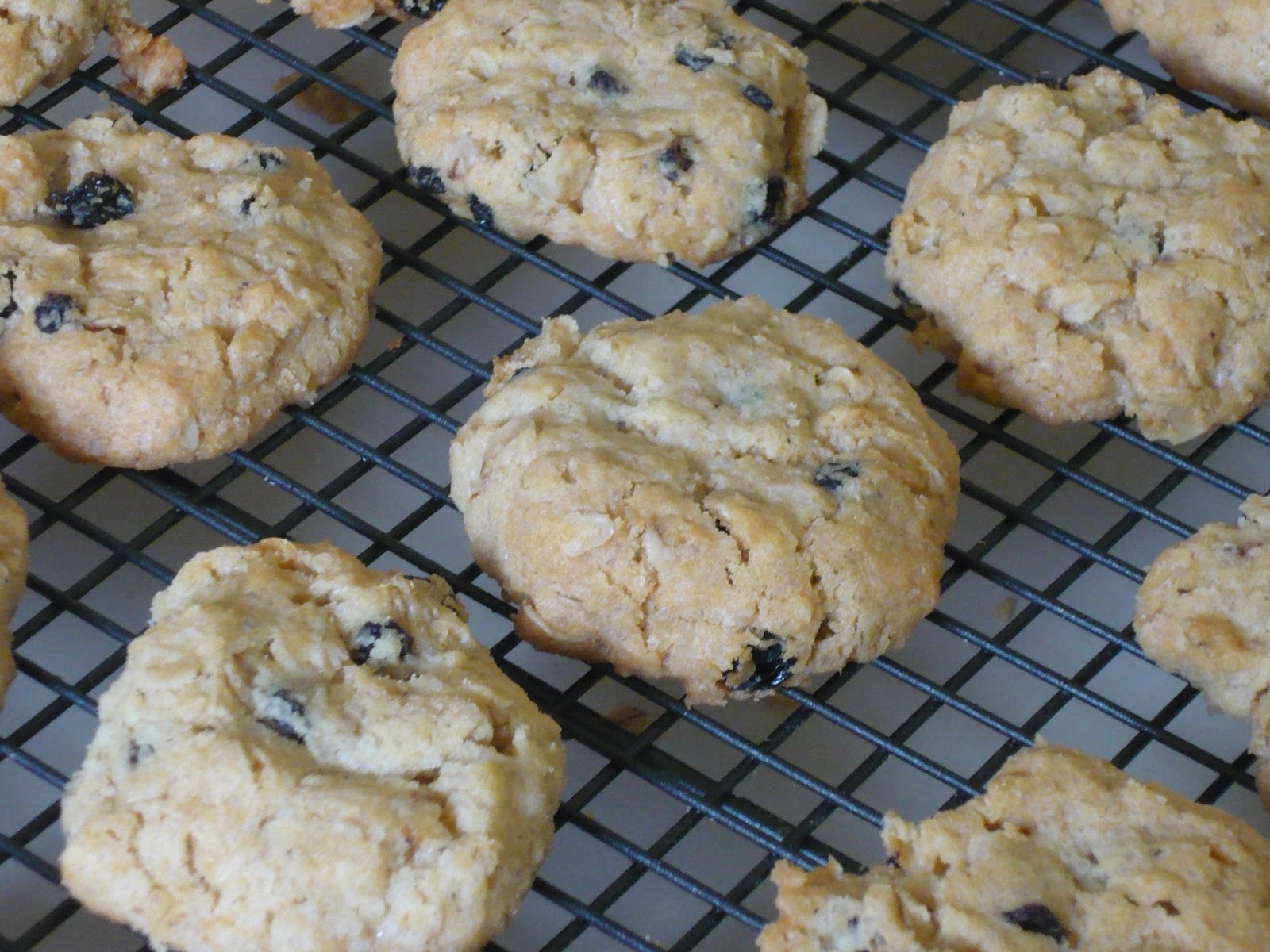
Oat and Currant Cookies

There is nothing quite like the smell of freshly baked cookies on a cold winter's day. Baking these simple and delicious cookies is also a wonderful way to pass time with your children when it is not so nice outside.

Cookies and other treats, when given occasionally, help children build a healthy attitude to eating and teaches them that all foods can be enjoyed in moderation. Baking also exposes kids to different tastes, textures, measuring and pouring skills, as well as being a practice in patience while waiting for those special treats to cook and cool.


Oat and Currant Cookies
2 cups SR flour
1 tbsp baking powder
2 cups oats
200g margarine
3/4 cup caster sugar
1 tsp vanilla extract
3/4 cup dried currants

  1. Sift flour into a large mixing bowl. Combine with baking powder and oats.
  2. In another bowl, beat margarine with the caster sugar until light and fluffy. Add vanilla, beating until combined.
  3. Gently fold currants through margarine mix. Then pour in dry ingredients, stirring with a wooden spoon until combined.
  4. Use a teaspoon to measure quantities. Form into small balls, depressing slightly in the middle with your finger.
  5. Place on a lined baking tray a few cm apart. Bake in a preheated oven at 180 degrees for about 15 min or until they start to colour ever so slightly.